What Are Pipe Fittings
author: li
2026-02-05

What Are Pipe Fittings? A Look at the Core Components Driving Global Infrastructure and Energy Development in 2026
Feb 5, 2026 — Pipe fittings, often overlooked yet indispensable components of pipeline systems, serve as the "connecting backbone" of modern infrastructure, energy development, and daily life. As the global economy focuses on infrastructure upgrading, energy transition and urban renewal in 2026, these small but critical parts are gaining unprecedented attention, with technological breakthroughs and market expansion reshaping their role in industrial and civil fields worldwide.
Defining Pipe Fittings: The Unsung Backbone of Pipeline Systems
In essence, pipe fittings are specialized components designed to connect, redirect, adapt, or seal sections of pipes. Their core function is to ensure the safe and efficient transportation of fluids, gases, and solids across various systems—from residential water supply lines to industrial oil and gas pipelines. Available in a wide range of types, classifications and materials, pipe fittings are tailored to meet diverse application needs, and their quality directly determines the stability, safety and service life of the entire pipeline system.
Key Classifications: Types, Connection Methods and Materials
Pipe fittings are categorized by three core criteria: function, connection method, and material, each tailored to specific operational requirements.
Functionally, the most common types include elbows (for changing pipe direction), flanges (for connecting pipe ends), tees and crosses (for branching pipelines), reducers (for adapting different pipe diameters), and seals such as gaskets (for preventing leaks). These components work together to keep pipeline systems flexible and functional.
In terms of connection methods, fittings are divided into welded, threaded, ferrule, clamp and socket types—each suitable for specific pressure, temperature and material demands. For example, welded fittings are ideal for high-pressure industrial pipelines, while threaded fittings are commonly used in residential plumbing for easy installation.
Materials are equally diverse, ranging from carbon steel and stainless steel to alloy steel, PE and composite materials. High-performance alloys and anti-corrosion materials are increasingly widely used in harsh environments such as deep-sea oil and gas development and chemical industry, where durability is critical.
2026 Industry Boom: Policy and Innovation Drive Growth
In 2026, the global pipe fittings industry is ushering in a new round of growth, driven by policy support and technological innovation. In China, consecutive policy backing for urban underground pipe network renovation under the "14th Five-Year Plan" and "15th Five-Year Plan" has injected strong momentum into the market.
The Chinese government has allocated 295 billion yuan in central budget investment, with 220 billion yuan specifically earmarked for urban underground pipe network construction. This has directly boosted demand for high-performance, corrosion-resistant fittings for gas, water supply and drainage networks. Industry estimates suggest that investment in China’s underground pipe network renovation will exceed 5 trillion yuan during the "15th Five-Year Plan" period, creating substantial growth space for the pipe fittings industry.
Technological Breakthroughs: Elevating Quality and Performance
Technological innovation is breaking industry bottlenecks and upgrading product quality, particularly in the high-end segment. In 2026, China has achieved major breakthroughs: the 80Ksi high-performance expandable pipe fittings independently developed by China Iron and Steel Research Institute have filled the domestic gap and are widely used in deep shale gas development.
Additionally, ultra-high strength and corrosion-resistant alloy fittings developed by Baoshi Pipe Industry have increased operational depth by more than 35%, supporting ultra-deep oil and gas exploration. The application of automated production, digital manufacturing and anti-corrosion coating technology has also improved product consistency and efficiency, while enhancing reliability in high-temperature, high-pressure environments—meeting strict requirements in emerging fields such as new energy and CCUS (carbon capture, utilization and storage). Notably, innovations like Wenger Technology’s "steel instead of copper" solutions have also addressed cost and resource challenges in the HVAC sector, further expanding the application scope of pipe fittings.
Global Market Outlook: Expansion and Regional Dynamics
The global pipe fittings market is steadily expanding, with a stable compound annual growth rate projected from 2025 to 2030. The flange and elbow segments are growing particularly fast, with the global flange market expected to reach approximately 10.58 billion US dollars by 2031. The global pipe joint market, a key subset of pipe fittings, is also thriving—valued at around 32.73 billion US dollars in 2023 and projected to hit 45.23 billion US dollars by 2030.
Asia-Pacific and North America have become the main growth engines, driven by continuous infrastructure investment. Asia, in particular, is seeing a rising market share as urbanization advances, with China, India and other emerging economies leading demand. Chinese-made fittings are also gaining traction globally, with exports growing significantly to India, Vietnam, the Middle East and other regions, supported by competitive pricing and efficient delivery. However, the high-end market demands strict international certification, pushing Chinese enterprises to accelerate technological upgrading and quality control.
Future Trends: High-End, Intelligent and Green Development
Industry insiders note that pipe fittings will increasingly develop toward high-end, intelligent and green directions, driven by global energy transition and infrastructure upgrading. In the future, "intelligent pipe fittings" with sensing and monitoring functions will be widely used in key pipeline nodes, enabling real-time monitoring of operational status and improving system safety and intelligence.
Green and low-carbon manufacturing concepts, along with recycled materials, will also become key trends—aligning with global carbon neutrality goals. Innovations like Wenger Technology’s anti-corrosion, energy-saving pipe fitting solutions further reflect this shift toward sustainability and efficiency.
Conclusion: Indispensable Components for Modern Development
From urban water supply and gas transmission to deep-sea oil and gas development, from new energy projects to aerospace fields, pipe fittings act as the "blood vessels" connecting various industrial systems, silently supporting modern society. As the 2026 industry boom continues, these core components will play an even more critical role in promoting global infrastructure construction, ensuring energy security and driving industrial upgrading—ushering in a new era of high-quality development. With expanding market规模 and continuous technological innovation, the pipe fittings industry is poised for sustained growth in the coming decade.
Say No to Safety Hazards! SUMEICHI Launches Custom Automotive-Grade Aluminum Alloy Tubing
Related Article
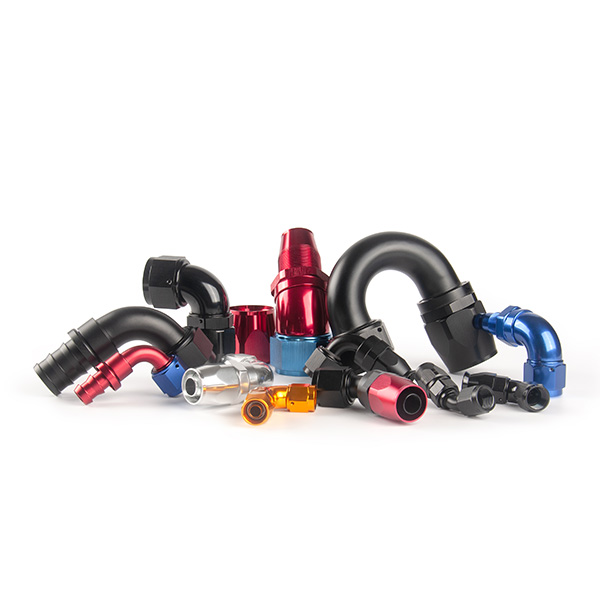
6061-T6 anodized aluminum straight AN fittings, full AN3-AN20 sizes, leak-proof 37° flare design for fuel and fluid systems.Reusable swivel elbow AN fittings for tight engine bay and marine pipeline routing, vibration-resistant and durable.
What Are AN Hose Fittings?
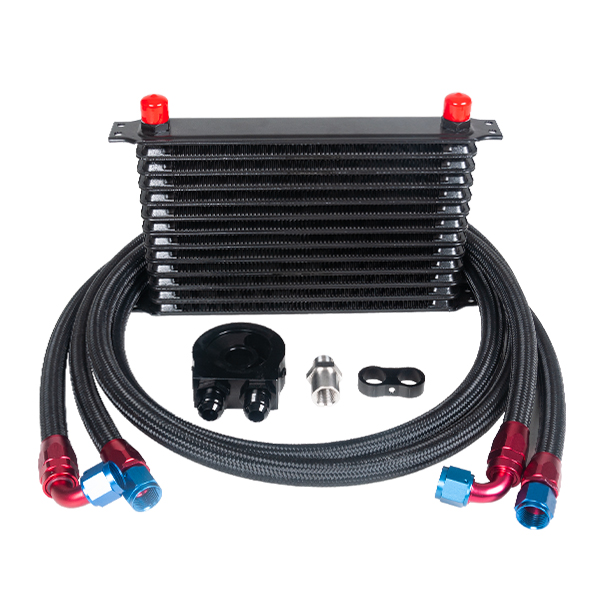
Sumeichi’s oil cooling product line offers comprehensive solutions for street bikes and track-tuned bikes. Whether you need a complete oil cooling kit, an oil separator, or a filter-type oil filter, we have what you need.
Are you looking for a high-quality engine oil cooling kit that combines performance, durability, and affordability?

Today we'll walk you through three key details of our factory:
Raw Materials: We use lightweight aluminum alloy 6061-T6 standard and hold ISO 9001 certification.
Processing: Precision thread machining ensures leak-free connections.
Whether NPT (American), BSP (British), or metric threads, they all fit perfectly.
Quality Control: Every batch undergoes dimensional monitoring, followed by pressure testing on finished products.
Raw Materials: We use lightweight aluminum alloy 6061-T6 standard and hold ISO 9001 certification.
Processing: Precision thread machining ensures leak-free connections.
Whether NPT (American), BSP (British), or metric threads, they all fit perfectly.
Quality Control: Every batch undergoes dimensional monitoring, followed by pressure testing on finished products.
Say No to Safety Hazards! SUMEICHI Launches Custom Automotive-Grade Aluminum Alloy Tubing